Choose two small places that connect
A whole-home reset is an appealing idea until every surface is covered and dinner needs to happen. A smaller project can improve the way two rooms work together without making either room unusable.
This walkthrough connects the entry area and the living-room shelf. The entry receives bags, shoes, and small objects. The living room receives the things carried farther inside. When those destinations are unclear, the same objects can migrate between the two places all week.
The example is a proposed method, not a documented before-and-after. Adapt it to the time, energy, and space you have. You can complete only the first part and still leave the home in a better state.
Before starting: define the finish line
Write down two visible outcomes. For the entry, try ‘the door opens fully and the daily bag has a place.’ For the living room, try ‘the spare seat is usable and the current reading is reachable.’ Neither outcome requires organizing the rest of the home.
Choose a temporary sorting place that does not block normal movement. A portable tray is useful because you can clear the work area quickly if someone needs the room. Keep sharp, fragile, or spill-prone objects separate and follow their normal handling requirements.
Gather a tape measure, paper, a pencil, and a few existing containers. Avoid starting with a shopping trip. At this point, you do not know which dimensions or features would solve the actual problem.
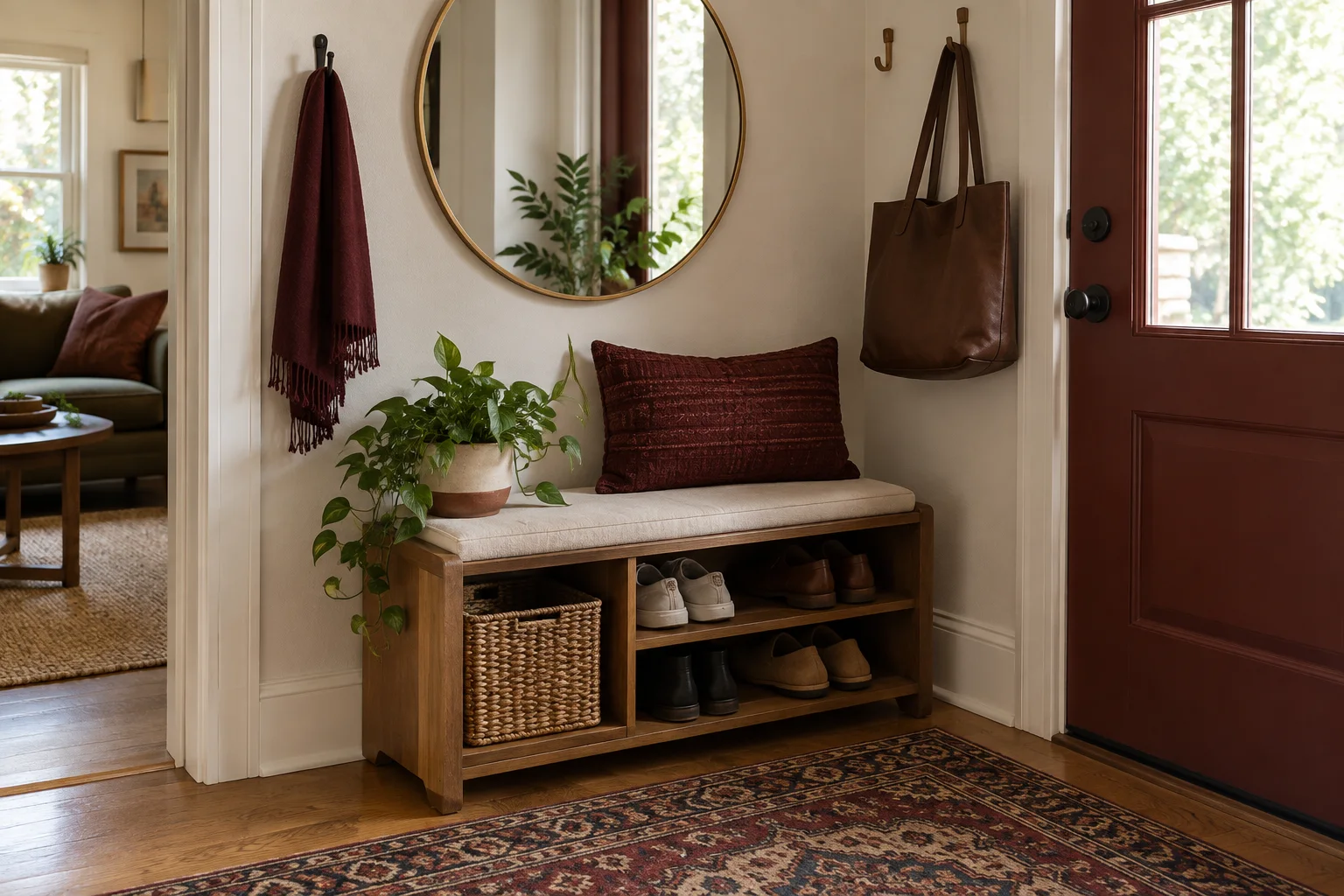
First pass: the entry corner
Remove only the objects that are clearly passing through. Put things ready to leave with the bag or trip that will take them. Put things belonging in another room into a small return group. Leave unresolved decisions separate from ordinary returns.
Now identify what genuinely needs to stay near the door. Usually this is a narrow daily collection rather than every outdoor item the household owns. Give each category a boundary using existing surfaces or containers.
Open the door through its full normal movement. Check the route while carrying a bag. If a tray, shoe, or basket interferes, move it before adding more objects. A useful entry area makes arriving and leaving easier; it must not become an obstacle course.
Stop here if needed. Return the sorting tray’s contents to suitable destinations and leave the door route clear. Completing one usable area is a successful session.
Second pass: the living-room shelf
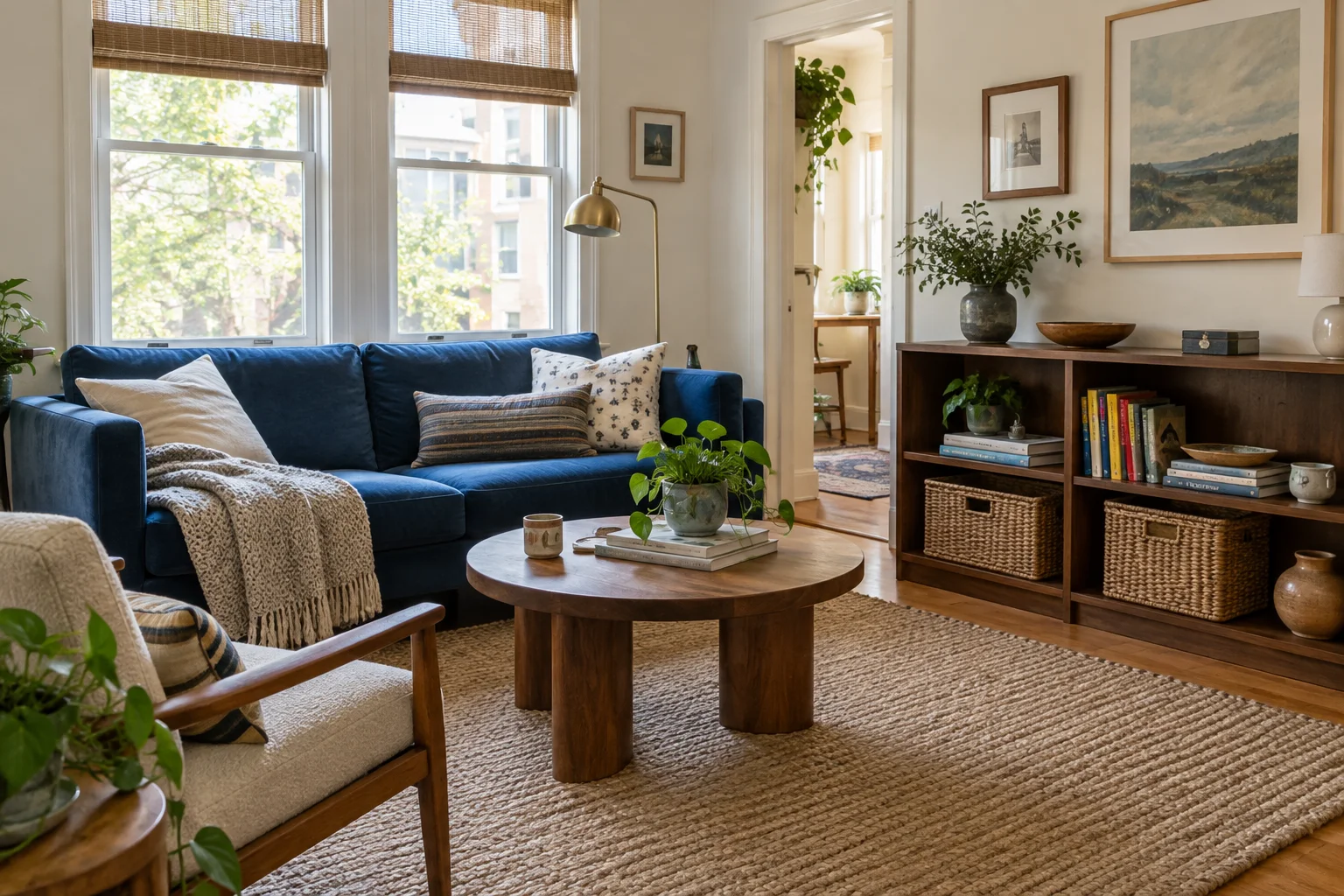
Choose one shelf near the activity you want to improve. Group its objects into daily use, occasional use, and passing through. The daily collection gets the easiest spaces. Occasional objects can use less convenient positions if they remain accessible.
Set the current books or project supplies where they can be removed without lifting an unrelated group. Keep a small clear area for setting an object down during use. Filling that space with a new container would remove its function.
Test the return journey immediately. Take out the blanket or book, sit where you would normally use it, and return it. If the motion is awkward, adjust the location while the project is still small.
Connect the two places
Look for objects that travel between the entry and living room. A bag may come to the sofa because it contains the current book. You might put the book on the reading shelf and return the bag to the entry, or give the bag a convenient destination nearer the sofa. Choose the arrangement that fits actual use.
A return basket can help with occasional transfers, but it should not shuttle the same daily object indefinitely. Repeated travel is evidence that the assigned home may be wrong. Move the home or change the routine rather than adding a second basket.
For a shared household, explain the two outcomes and ask another person to try the destinations. Their confusion is useful information. Simplify the groups or use familiar labels if the arrangement needs too much explanation.
Write a tiny shopping list, if anything is missing
Record the unsolved problem before naming a product. ‘Need a container that lets the blanket come out without moving the books’ is a better starting point than ‘buy three matching baskets.’ Include the usable dimensions and the access motion.
Use a temporary container long enough to find out whether the proposed location works. Then measure the replacement’s maximum outside dimensions, including its rim or handles. The planner can help compare footprints, but the physical trial remains important.
If nothing remains awkward, skip the purchase. A successful reset can consist entirely of moving a few objects and giving a surface a clearer purpose.
The next ordinary day is the real review
After the next normal arrival home, notice where the bag and keys land. After the next evening, notice whether the seat stays usable and the reading returns to the shelf. Make one adjustment based on what happened.
Do not judge the arrangement by whether the room remains photograph-ready. A home in use will contain objects in use. Judge whether it is straightforward to move between activities and return the things that have finished their job.
If you want a small maintenance routine, use the ten-minute closing routine. If the arrangement repeatedly needs more effort than it saves, revisit the locations rather than making the routine longer.
Prepared with AI assistance. Examples are illustrative unless explicitly identified otherwise. The owner has reviewed this article. Read our editorial approach or report a correction.